 The
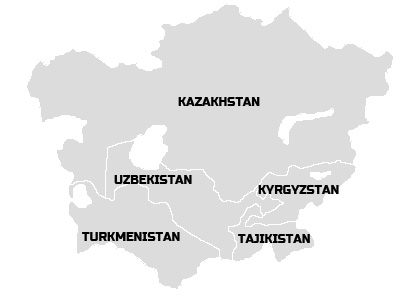
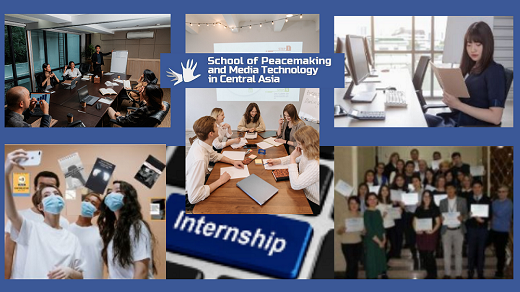
School of Peacemaking and Media Technology in Central Asia announces an annual competition
among students from Kyrgyzstan, Kazakhstan, Uzbekistan, Tajikistan, studying journalism and
mass communication, law, cultural studies and anthropology, to participate in
research and media monitoring projects.
The
School of Peacemaking and Media Technology in Central Asia announces an annual competition
among students from Kyrgyzstan, Kazakhstan, Uzbekistan, Tajikistan, studying journalism and
mass communication, law, cultural studies and anthropology, to participate in
research and media monitoring projects.
Over the past six years, about 80 students have completed research internships.
This internship is scheduled for the period from December 15, 2023 to January 25,
2024.
In some cases, a student can start an internship earlier.
The internship will be carried out in a distance format or offline.
The selected interns will be trained in new analytical tools, will have access to databases
and, together with the team, will conduct a few studies.
Participation in the project is a good practice, upon completion of which an internship
confirmation letter will be issued. An important criterion for selecting interns is language proficiency, perseverance, attentiveness, a clear application of methodology and indicators in practice, a desire to work with large amounts of information.
Topics for research this year:
Freedom of expression in the conflict time
Media хenophobia and hate speech (focused on local countries context)
Media and conflict
Information wars and geopolitics
A motivation letter and a CV including the contacts of at least two referees should be sent to peacemakingandmediaca@gmail.com until 18:00 Bishkek time, December 6, 2023 marked "For internship".
Applications sent after this deadline will not be considered. The team does not comment on
the selection methods and does not respond to letters of inquiry after the end
of the call.
About the organization:The School of Peacemaking and Media Technology in Central Asia is a media
development, peace communications and freedom of expression organization focused on countering hate speech, discrimination in the media, on the Internet and public discourse.
Our vision statement aims at encouraging diversity, human rights, peace fair journalism access to information and citizens making informed opinions as a means of promoting a tolerant society.
Since 2011, the School of Peacemaking and Media Technology in Central Asia has implemented nearly 20 programs focused on these activities.
 The School of Peacemaking and Media Technology in Central Asia is
announcing the call for participation in the "Reporting on minority and
marginalised groups issues’ workshop” to be held in late October thru early
November 2022 in Bishkek.
The School of Peacemaking and Media Technology in Central Asia is
announcing the call for participation in the "Reporting on minority and
marginalised groups issues’ workshop” to be held in late October thru early
November 2022 in Bishkek.
The working languages of the event are Russian, Kyrgyz.
Journalists and editors from Kyrgyzstan are invited to participate in the training. All costs will be covered by organisers.
To take part in the call, you have to submit a filled application form, a CV of a potential participant, a scanned copy of a passport, as well as a motivation letter for participation to the e-mail peacemakingandmediaca@gmail.com marked as "For training”.
The main criteria of selection will be their current activities in the sphere, understanding of importance of human rights and promotion of minority and vulnerable group issues in the media.
The deadline for applications is 5.00 pm Bishkek time, October 5, 2022.
Applications submitted after the deadline will not be considered. The team does not comment its selection methods and does not reply to requests after the competition is over.
The event will be held under the Peacemaking School’s programme on the promotion of media freedom and diversity, supported by the Canada Fund for Local Initiatives (CFLI).
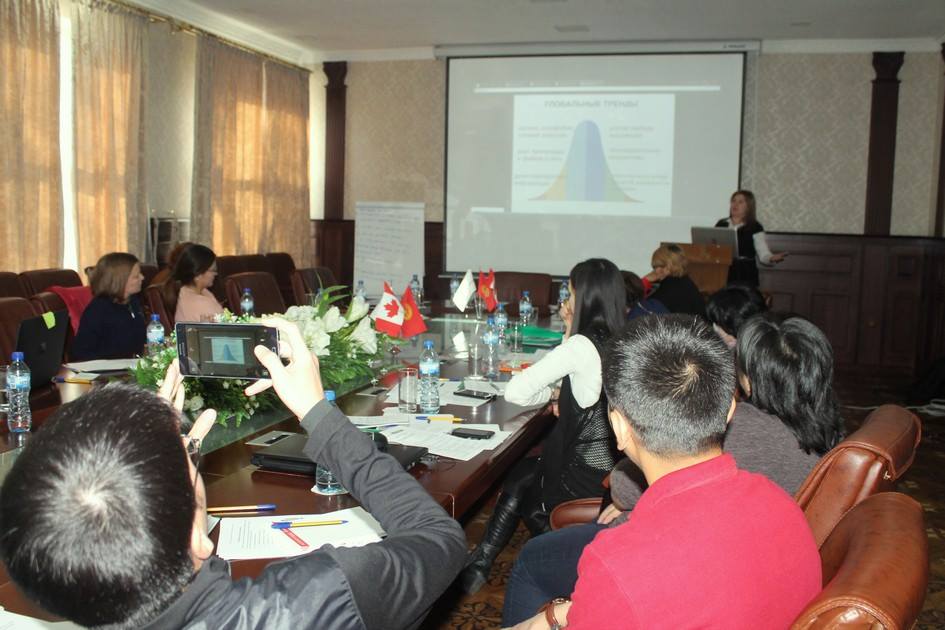 Activists
working in NGOs on the issues of diversity, minorities and social groups from
various regions of Kyrgyzstan trained effective communications with media at the workshop held in Bishkek on November 23, 2017.
Activists
working in NGOs on the issues of diversity, minorities and social groups from
various regions of Kyrgyzstan trained effective communications with media at the workshop held in Bishkek on November 23, 2017.
The training program comprised interactive sessions and practical group exercises. Participants learned about the purposes of communications and newsbreaks, learned how to make standard events interesting for media, understood to find topics that may be of interest for the audience when covering the activities of NGOs in the context of minorities issues.
A special session was dedicated to the freedom of expression, hate speech and stereotypes, and also the skills of compiling glossaries on overcoming hate speech to work with sensitive content. During intensive group games, participants practiced the skills of communicating with journalists, and learned to hold press conferences given the model situation.
Natalya Lyubeznova, a trainer of the workshop, says that effective communications between media and communities will help activists promote significant ideas and projects important for the people.
"Acquiring the interaction skills is needed to establish contacts and relations, to understand the choice of ways of community target achievement, including through the formation of a favorable attitude, which will neutralize the public negative attitude, which was shaped due to various legal initiatives focused on the reduction of civil sector activities,” Lyubeznova emphasized.
 Female journalists and activists have discussed the situation with gender stereotypes and stigma on the Internet and have learned to understand discrimination and tools to counter, assess risk factors to improve their psycho-emotional state during aggression in the online sphere.
The workshop was organized by the School of Peacemaking and Media Technology in Central Asia with the support of the Canada Fund for Local Initiatives (CFLI).
Women participants from different regions of Kyrgyzstan have gathered at the training organized under the project designed to promote gender equality and women’s rights via monitoring, documenting, analysis of the level of stereotypes, stigma regarding women in the media, on the Internet and public discourse.
Female journalists and activists, many of whom encounter threats, aggression, and stereotypical behavior in their professional activities have learned about modern methods of detection of gender intolerance on the internet, preventive techniques and ways to mitigate negative consequences.
Women participants have trained to determine the kinds of discrimination and to discern between them during group practice sessions on detection and classification of discrimination.
The last session focused on the analysis of psycho-emotional state of journalists and activists during their work. Many participants have understood how to use their innate resources and to organize mental self-help by means of analytical exercise and interactive discussion designed to detect risk factors and develop personal defense mechanisms.
The research "Gender stereotypes in the media sphere of Kyrgyzstan” was also presented during the event. It demonstrated frequently used stereotypes, intolerance and threats regarding women in Kyrgyzstan.
The participants of the event discussed the recommendations prepared on the basis of the research. The recommendations will be directed to the authorities, the media, and civil society organizations.
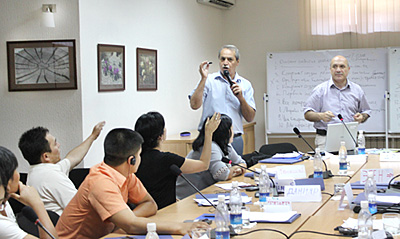
 25 journalists and media workers from various regions
of Kyrgyzstan have been trained to counter the propaganda of violent extremism
and hate in the media. The training programme was developed by a team of local
and international trainers based on the findings of the media-monitoring sphere
of Kyrgyzstan and with the use of new interactive tools.
25 journalists and media workers from various regions
of Kyrgyzstan have been trained to counter the propaganda of violent extremism
and hate in the media. The training programme was developed by a team of local
and international trainers based on the findings of the media-monitoring sphere
of Kyrgyzstan and with the use of new interactive tools.
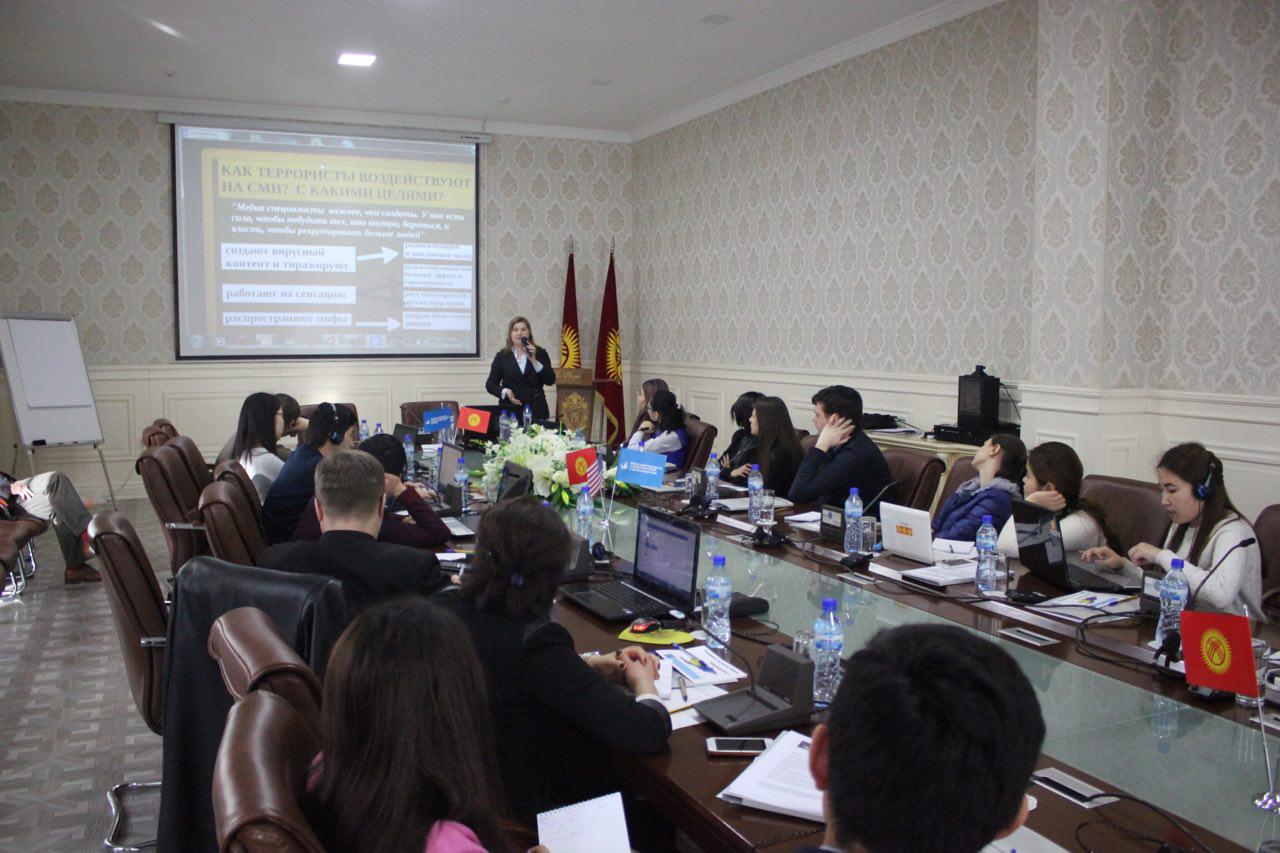 The participants have learned about the media used by
banned groups to spread extremist propaganda, the mistakes made by journalists
and users that lead to the propaganda of extremism, how hate speech and
Islamophobia affect the radicalisation of the media. A few sessions have been
dedicated to the key aspects of religious safety of Kyrgyzstan, legal standards
of international laws on violent extremism, radicalism and terrorism, communication’s
methods between official bodies and media outlets when covering security
issues.
The participants have learned about the media used by
banned groups to spread extremist propaganda, the mistakes made by journalists
and users that lead to the propaganda of extremism, how hate speech and
Islamophobia affect the radicalisation of the media. A few sessions have been
dedicated to the key aspects of religious safety of Kyrgyzstan, legal standards
of international laws on violent extremism, radicalism and terrorism, communication’s
methods between official bodies and media outlets when covering security
issues.
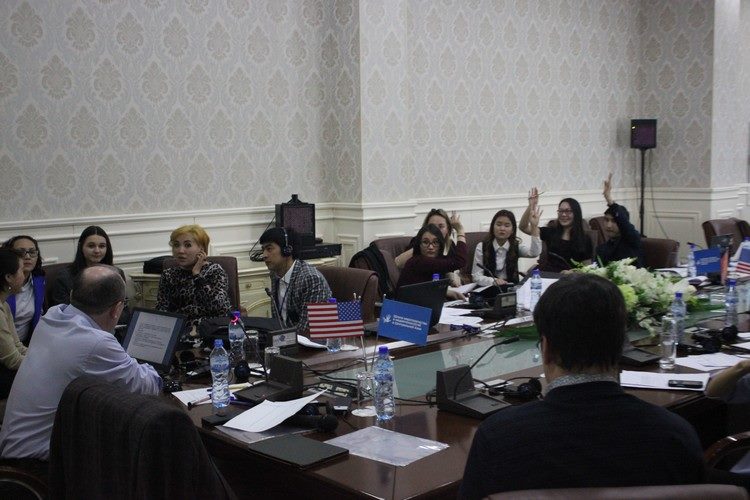 The participants have applied the skills they acquired
to situational group games and practical exercises, and have jointly developed
recommendations on "What journalists can and must do to cover the events
related to extremism and terrorism, and what they should not do.”
The participants have applied the skills they acquired
to situational group games and practical exercises, and have jointly developed
recommendations on "What journalists can and must do to cover the events
related to extremism and terrorism, and what they should not do.”
 On the last day, a presentation of handbook "How to
counter extremist propaganda” in Kyrgyz and Russian developed by the project
experts exclusively for the media outlets was delivered. The handbooks have
been given to the media in Osh, Jalal-Abad, Batken regions and Bishkek, as well
as to the universities to the departments of journalism and communications.
On the last day, a presentation of handbook "How to
counter extremist propaganda” in Kyrgyz and Russian developed by the project
experts exclusively for the media outlets was delivered. The handbooks have
been given to the media in Osh, Jalal-Abad, Batken regions and Bishkek, as well
as to the universities to the departments of journalism and communications.
The two-day training-workshop was organised by School of Peacemaking and Media Technology in CA under the "Combatting Violent Extremism Through Media and Awareness’ Project implemented with the financial support of the US Embassy in Bishkek.
 The School of
Peacemaking and Media Technology in Central Asia with the financial support of the Democracy Commission of US Embassy in the
Kyrgyz Republic is implementing the project intended for early warning of
extremist propaganda, by building rapid response for radical discourse via the
media and communications strategies.
The School of
Peacemaking and Media Technology in Central Asia with the financial support of the Democracy Commission of US Embassy in the
Kyrgyz Republic is implementing the project intended for early warning of
extremist propaganda, by building rapid response for radical discourse via the
media and communications strategies.
The analysis of media sphere and internet carried out by the project experts shows that religious intolerance takes one of the top places among all media phobias and can contribute to the conveyance of extremist ideology. The media often form their content based on news events found on the internet. On the one hand, they provide the audience with more diverse information; on the other hand, they can retransmit the ideas of extremism once they get caught by the propaganda. Moreover, when covering extremism and related issues visual content from various online sources is being widely used. This content is often the propaganda of radical narratives leading to violent extremism.
Based on the researche findings, project staff has developed recommendations and tools of combating the propaganda of violent extremism in media and internet such as training programs for journalists and activistc, as well as models of media campaigns on how to treat these issues in the public domain.
"In our project activity, we apply the peacemaking approach to countering hate in the media as an early warning of extremist propaganda” I. Sikorskaya, Director of the School of Peacemaking and Media Technology in CA, said. "Today journalists, internet activists and communicators have found themselves vulnerable to the propaganda of extremism; so our task is to teach them how to effectively respond to the radical discourse.”
In the framework of the project, journalists and activists will be trained the tools that will help them detect extremist propaganda, use advanced methods to report extremism, humanize Islam in stories to overcome the image of the enemy and reduce the risks of extremism propaganda, respond adequately to destructive online communications.
The School of Peacemaking and Media Technology in Central Asia supported by the Canada Fund for Local Initiatives (CFLI) announces the contest for participation in a one-day training "Effective Communications Between the Media and Communities” to be held on November 23, 2017 in Bishkek.
Working language – Russian.
We are inviting PR officers from NGOs involved in diversity and minorities issues, as well as journalists from media outlets that cover these issues. The training covers the techniques of overcoming discrimination in the media, communications tools, developing action plans to encourage diversity in media environment.
Organizers shall cover all costs.
To take part in the contest, the applicant should submit a completed application form (here , a CV of a potential participant, attach a scan of passport, and a letter (on the official letterhead) of the referring entity with the request for participation. The main selection criteria will be the current activity of the applicant in this area, understanding of the significance of diversity in the society, the promotion of vulnerable group issues in the media.
The deadline for applications is 17.00 Bishkek time, November 16, 2017.
All applications with a full package of documents should be submitted at: peacemakingschool@gmail.com
Journalism must become the key vehicle in countering hate speech, xenophobia and propaganda in media and on the Internet.
On the occasion of the World Press Freedom Day celebrated on May 3, 2016, the School of Peacemaking and Media Technology in Central Asia encourages the promotion of quality journalism and ethic communications in order to counter modern challenges.
In Central Asia, as well as in many other countries around the world, the crisis in the media sphere has been caused by the governmental control, lack of journalism standards, and increasing language of intolerance. Continuous monitoring and studies of media and Internet highlight such trends. Xenophobia and its various types are expressed in open or veiled forms of intolerance in the media environment, which results in the hostility in response, negative impact on the audience, and encouragement of inhumane stereotypes in the society. The negative discourse is promoted by the propaganda, network aggression, and a series of fibs circulated in media and Internet.
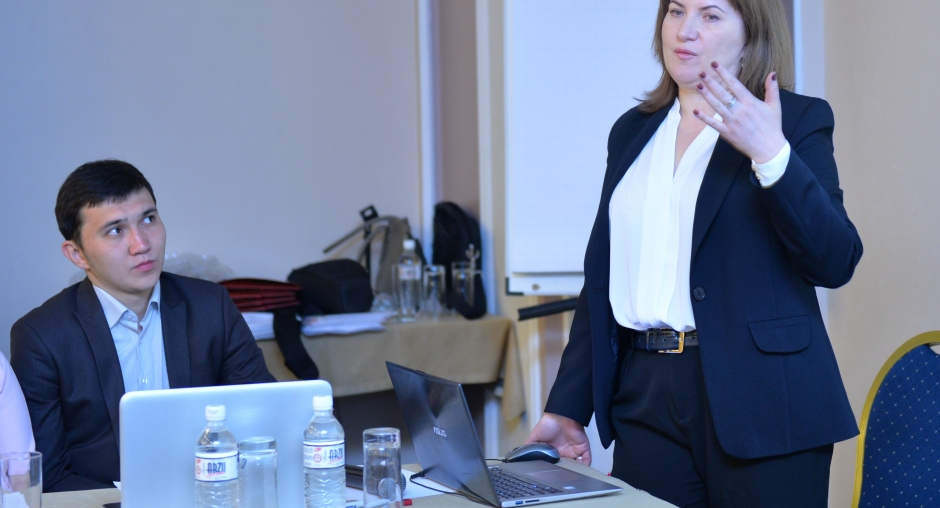 ASTANA, 19 April 2016 – An OSCE-supported two-day training seminar on
protecting freedom of expression and countering hate speech on the
Internet began today in Astana.
ASTANA, 19 April 2016 – An OSCE-supported two-day training seminar on
protecting freedom of expression and countering hate speech on the
Internet began today in Astana.
Some 40 journalists, lawyers, academics, representatives of the Justice, Interior, Investment and Development Ministries, the Prosecutor General’s Office, the Anti-terrorism Centre under the National Security Committee and Supreme Court gathered to discuss the relationship between media and hate speech policies and ways to enhance co-operation between governments, civil society and media organizations.
The event was co-organized by the OSCE Programme Office in Astana and the Legal Media Centre, a non-governmental organization based in Kazakhstan.
 Russian for
foreigners [students, tourists e t c] including learning for interpersonal
communication and social intercourse in the Russian language, self-presentationtools, an elementary speaking and writing skills, overcoming the language
barrier. Level: Waystage User; Threshol. Learning based on unique methods in
consideration of native language of students. Duration of classes 1 hour 10
minutes five times a week including the practice in socio-cultural
environment.
Russian for
foreigners [students, tourists e t c] including learning for interpersonal
communication and social intercourse in the Russian language, self-presentationtools, an elementary speaking and writing skills, overcoming the language
barrier. Level: Waystage User; Threshol. Learning based on unique methods in
consideration of native language of students. Duration of classes 1 hour 10
minutes five times a week including the practice in socio-cultural
environment.
Please call: (0312) 69- 40 -15off; (0312) 69- 40- 16 off, 0771472892 mob. Bishkek, Kyrgyzstan
Business writing and speaking in English, public, social and interpersonalcommunications, self-presentation tools, linguistic thinking, language thinking and reasoning, overcoming the language barrier. Level: Intermedia +.
Lessons are conducted 4 or 5 times a week. Please contacts: (0312) 69- 40 -15off; (0312) 69- 40- 16 off 0771472892 mob or peacemakingschool@gmail.com
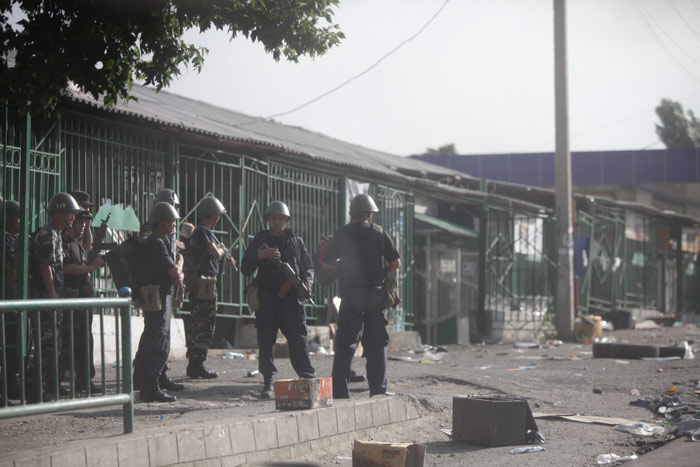
Military men near the aftermarket during mass clashes, Osh, June 201
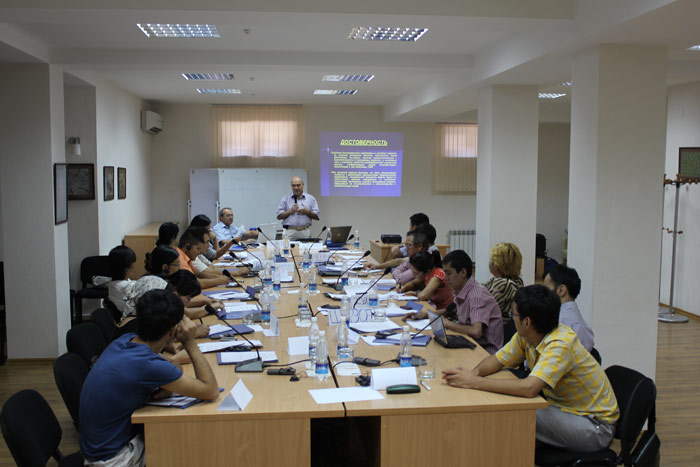
Training’s participants on mediation and conflict management are building the Tower of Peace, Bishkek, April 2011
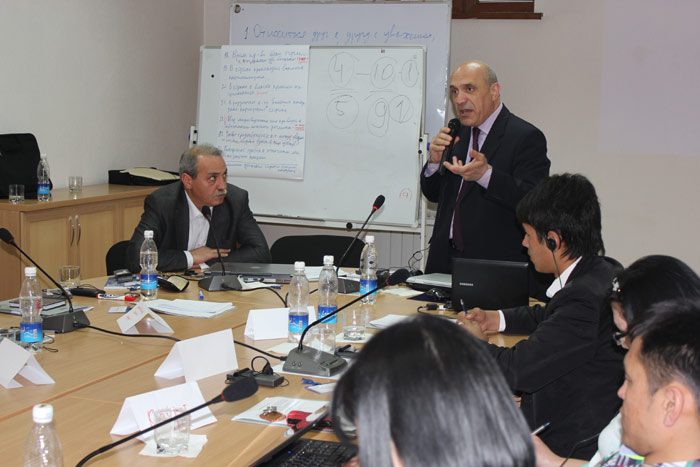
Training in destroying stereotypes for journalists, Bishkek, April 2012
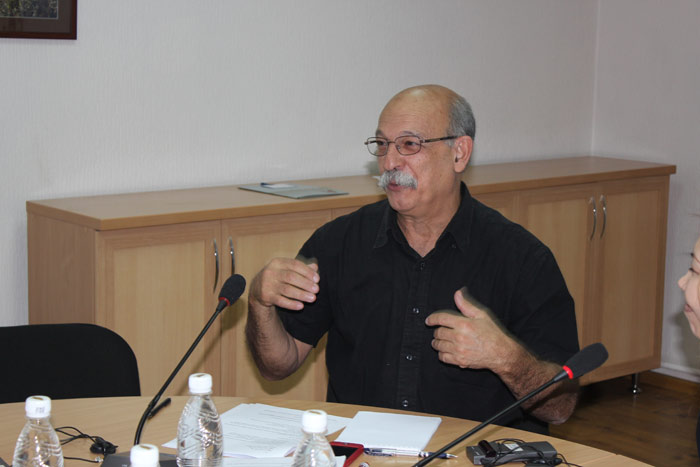
Workshop on production of team reporting in multinational journalist groups, Bishkek, August 2012

The School of Peacemaking and Media Technology in Central Asia announces an annual competition among students from Kyrgyzstan, Kazakhstan,…
25 journalists and media workers from various regions of Kyrgyzstan have been trained to counter the propaganda of violent extremism and hate in…